News

Recent news from TECO, with links to the original posts on LinkedIn.

1792058767832

UbiCompISWC26

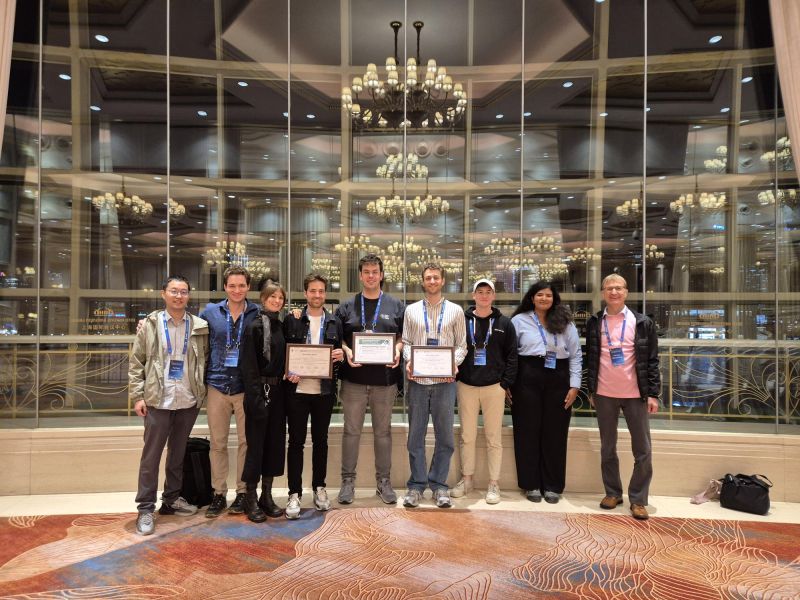
Looking back at a very successful week at #UbiCompISWC26 in Shanghai. It was great to see the breadth of excellent research, demos, and discussions across the ubiquitous and wearable computing community. Many thanks to everyone who helped organize the conference and make the week possible. I am especially happy how the #TECO team showed its work across the conference program and how they presented their many contributions on stage and in the booth. Moreover, I am proud that Tobias Röddiger and colleagues received an #IMWUT Distinguished Paper Award, Philipp Lepold and colleagues the #ISWC Best Paper Award, and Jonas Hummel and colleagues the #UbiComp Best Demo Award. These recognitions are a reflection of the dedication and teamwork behind the projects. Congratulations to everyone involved, including all co-authors and collaborators. Let's keep on working hard - #TECO is looking forward to #UbiCompISWC27 in #Seoul.

Read more
1791791596371

Keynote Speach UbiSense'26

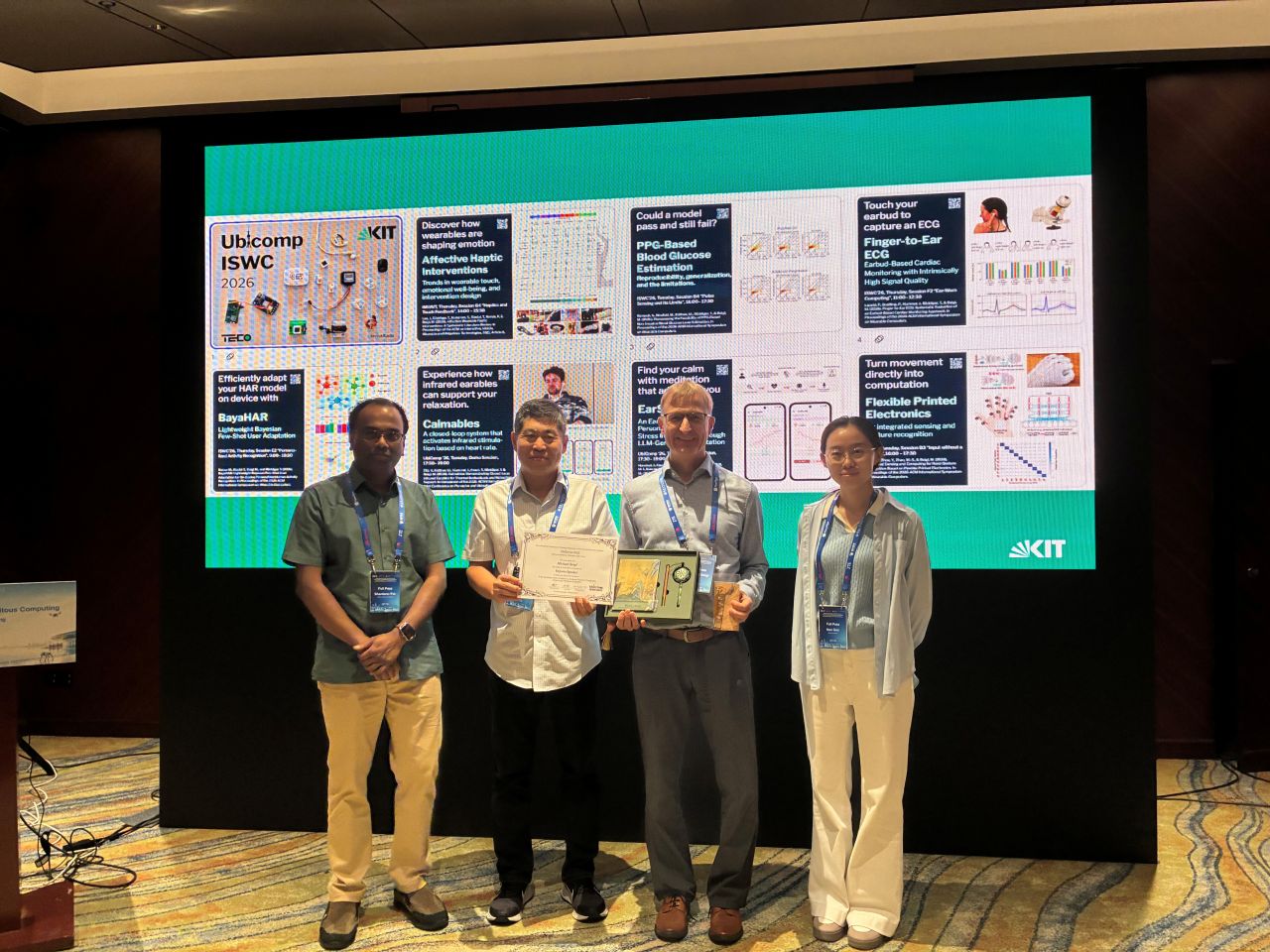
99% accurate, and still the wrong decision? Today, I had the pleasure of giving a keynote at the #UbiSense2026 workshop at #UbiComp26 in Shanghai: 𝗙𝗿𝗼𝗺 𝗦𝗲𝗻𝘀𝗶𝗻𝗴 𝘁𝗼 𝗔𝗰𝘁𝗶𝗼𝗻: 𝗘𝘀𝘁𝗮𝗯𝗹𝗶𝘀𝗵𝗶𝗻𝗴 𝗘𝘃𝗶𝗱𝗲𝗻𝗰𝗲 𝗖𝗵𝗮𝗶𝗻𝘀 𝗳𝗼𝗿 𝗧𝗿𝘂𝘀𝘁𝘄𝗼𝗿𝘁𝗵𝘆 𝗖𝗹𝗼𝘀𝗲𝗱-𝗟𝗼𝗼𝗽 𝗪𝗲𝗮𝗿𝗮𝗯𝗹𝗲 𝗖𝗼𝗺𝗽𝘂𝘁𝗲𝗿𝘀 Wearable systems are increasingly moving beyond simply measuring and recognizing our behavior towards making decisions and triggering interventions. But is sensing accuracy alone enough to trust these decisions? A wearable detecting a rare condition with 99% sensitivity and specificity might sound reliable, yet only around 9% of its alarms may actually be correct. In my keynote, I discussed why we need to look beyond technical performance metrics and proposed a five-step evidence ladder, from signal fidelity and generalization to decision utility, intervention efficacy, and actual user benefit. Drawing on examples from our research at #TECO and recent work in wearable sensing, I highlighted why we should not only ask whether our systems measure correctly, but whether their actions really help people. Sometimes, the most important action a wearable can take is none. Many thanks to Shantanu Pal, Hao Xue, Nan Gao, Judith H., Flora Salim, and Haining Zhang for organizing #UbiSense2026 and inviting me to contribute! It was a pleasure to share these thoughts and discuss the future of ubiquitous sensing with the community. #Wearables #UbiquitousComputing #DigitalHealth #WearableSensing #ClosedLoopSystems #ISWC #TECO #KIT

Read more
1790084255257

Accepted Papers to ISWC26

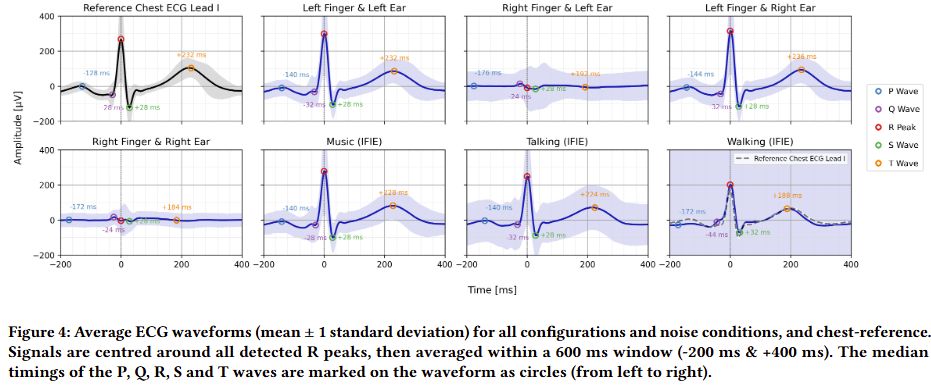
📢 We at #TECO are proud to announce that three of our papers have been accepted to #ISWC26 at #UbiCompISWC26 in #Shanghai! This year, our contributions span personalized #HumanActivityRecognition, robust evaluation for wearable health sensing, and earbud-based cardiac monitoring. --- 🏃 Personalized activity recognition with just seconds of calibration “BayaHAR: Lightweight Bayesian Few-Shot User Adaptation for On-Device Personalized Human Activity Recognition” – Maximilian Burzer et al. With #BayaHAR, we introduce a lightweight, gradient-free approach for personalizing pretrained HAR models directly on wearable devices. Bayesian prototype updates enable adaptation from very little user-specific data: with only three seconds of calibration per activity, supervised adaptation improved macro-F1 by 2.76 to 33.44 percentage points across four datasets, while requiring no backpropagation on-device. 📄 Preprint: https://lnkd.in/dS7Sa89j --- 🩸 When promising glucose-estimation results do not generalize “Reassessing the Feasibility of PPG-Based Non-Invasive Blood Glucose Level Estimation” – Supraja Ramesh et al. We systematically reassess five representative methods for estimating blood glucose from #PPG using a reproducible evaluation pipeline. While models appear competitive with random train-test splits, their performance largely collapses when evaluated on unseen participants. At the same time, commonly used clinical error-grid metrics still report more than 90% acceptable predictions – even for a simple baseline – highlighting why careful evaluation is essential before assessing real-world utility. 📄 Preprint: https://lnkd.in/dQg5jvjY --- ❤️ Touch your earbud to capture an ECG “Finger-to-Ear ECG: Systematic Evaluation of an Earbud-Based Cardiac Monitoring Approach” – Philipp Lepold et al. #FingerToEarECG combines an in-ear electrode with a finger-contact electrode on the earbud housing for opportunistic cardiac sensing. In a study with 30 participants, left-finger configurations achieved R-peak detection F1-scores above 99% while preserving important ECG morphology, demonstrating the potential of a simple earbud touch interaction for high-quality cardiac monitoring. 📄 Preprint: https://lnkd.in/dJGYuK8w --- #ISWC #WearableComputing #WearableTech #HumanActivityRecognition #PersonalizedAI #PPG #Glucose #DigitalHealth #Earables #CardiacMonitoring #MachineLearning #HumanComputerInteraction #TECO

Read more
1791791596371

Accepted Papers to UbiComp'26

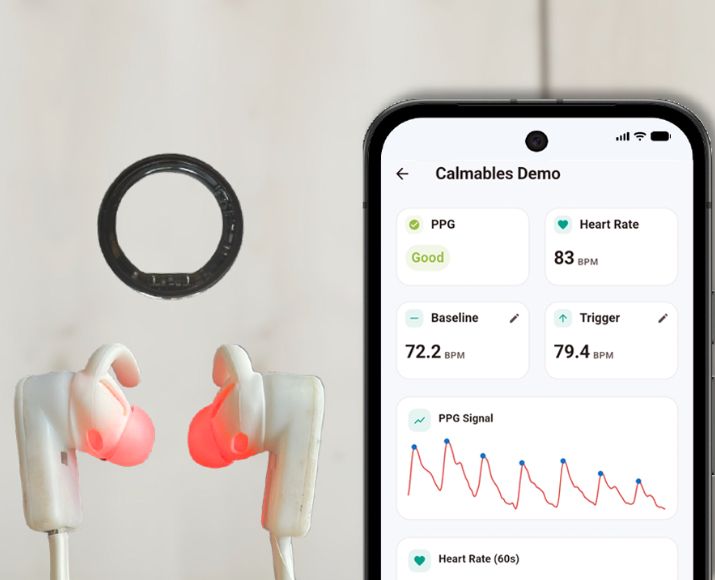
📢 We at #TECO are proud to announce that two of our interactive demos have been accepted for #UbiComp26 (October 13-15) in #Shanghai! Both contributions explore how #earables can move beyond sensing and provide personalized, closed-loop support for stress recovery and relaxation. --- 🌡️ Ear-localized warmth for biofeedback and relaxation support “Calmables: Demonstrating Closed-Loop Infrared Earables for Thermal Biofeedback and Relaxation Support” – Valeria Zitz & Michael Küttner et al. With #Calmables, we combine smart-ring heart rate sensing with infrared ear warming to provide subtle thermal cues during short recovery moments. When heart rate remains elevated, the system activates localized warming through #Heatables. Attendees can experience manual and heart rate-responsive modes through a live dashboard. Preliminary placebo-controlled results from 18 participants indicate higher perceived relaxation and recovery support with active stimulation. --- 🧘 Personalized stress-adaptive meditation with OpenEarable 2.0 “EarStreAM: A Closed-Loop Earable System for Personalized Stress-Adaptive Meditation” – Jonas Hummel et al. #EarStreAM uses #OpenEarable 2.0 to monitor heart rate and heart rate variability and detect elevated stress. The system then starts an LLM-generated guided meditation and adapts it in real time to the user’s physiological state. The demo combines in-ear sensing, generative personalization, and closed-loop adaptation for individualized stress support in demanding workplace contexts. Together, both demos show how earables can not only sense physiological states but also respond through personalized interventions. #WearableComputing #WearableTech #OpenEarable #DigitalHealth #StressManagement #Biofeedback #EdgeAI #HumanComputerInteraction #TECO

Read more
1784273122168

Outing Sasbachwalden

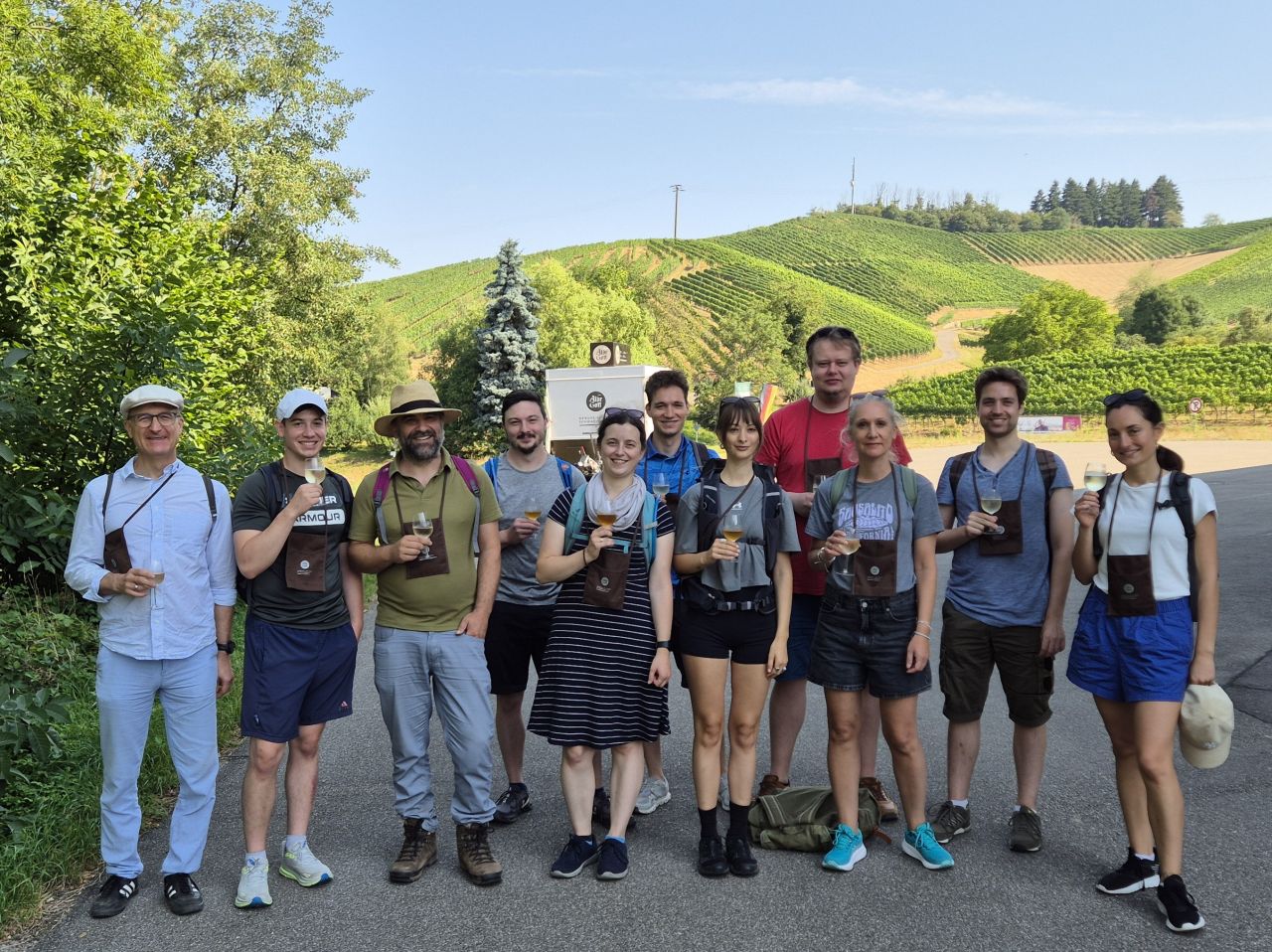
For our annual outing, we went to Sasbachwalden yesterday. We enjoyed the beautiful scenery, tried some local wine, and appreciated a day away from the usual #TECO routine.

Read more
1781511801706

Accepted DATE'26 Paper

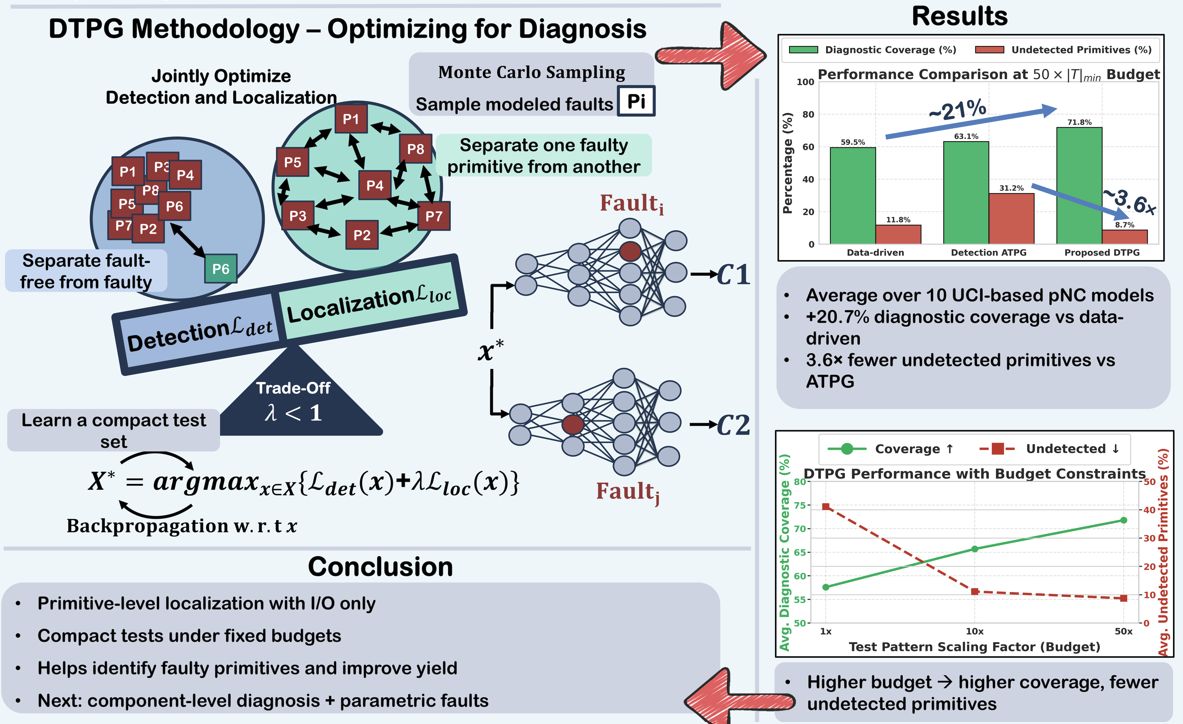
📢 We at #TECO are delighted that our work, “Diagnostic Test Generation for Fault Localization in Printed Neuromorphic Circuits,” was presented at #DATE26 in Verona by Alexander Studt and Tara Gheshlaghi. As #PrintedElectronics and printed neuromorphic circuits (#pNCs) enable cost-effective, flexible, and low-power intelligent edge systems, manufacturing reliability remains a key challenge. Additive fabrication processes can introduce variations and structural defects that significantly affect circuit functionality, making testing and diagnosis essential for reliable and scalable deployment. In this work, we introduce a diagnostic test pattern generation framework for fault localization in printed neuromorphic circuits under black-box access. While traditional automatic test pattern generation focuses on fault detection, our approach explicitly optimizes for fault distinguishability, enabling more precise localization of defective subcircuits. Key results include: -      Up to 20.7% higher diagnostic coverage compared to detection-only test generation -      Up to 3.6× fewer undetectable subcircuits at the same test budget -      Compact test sets that limit storage overhead while improving diagnostic effectiveness Our results show that diagnostic-aware test generation can substantially improve fault localization in printed neuromorphic hardware while providing valuable insights for yield improvement and reducing downstream inspection costs. We see this as an important step toward reliable and scalable neuromorphic computing hardware manufactured using additive processes. You can access the accompanying paper here: 🔗 https://lnkd.in/etasq9E4 #DATE #PrintedElectronics #NeuromorphicComputing #EdgeAI #HardwareTesting #AIHardware #ResearchInnovation #TECO

Read more
1774265857857

Connection Machine at ZKM

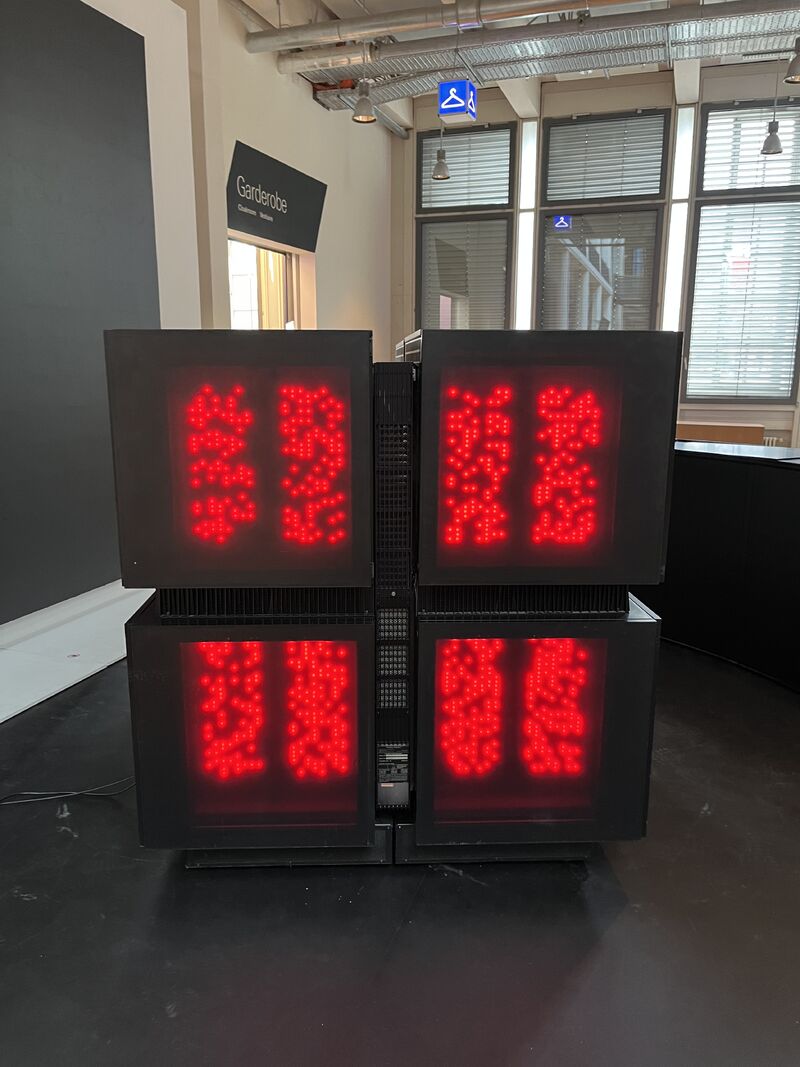
Join us this Friday and Saturday (March 27–28) at ZKM | Zentrum für Kunst und Medien for the conference “Visionäre KI: Das vergessene Erbe der Connection Machine.” After more than a year of dedicated engineering, coordination, and reconstruction efforts, it is exciting to see a remarkable piece of computing history being brought back to life. The original #ConnectionMachine was the first commercial #supercomputer based on a massively parallel architecture and played an important role in shaping both modern high-performance computing and #AI systems. Over the past year, Philipp Lepold and I engineered #replica LED matrices true to the original as well as the accompanying software, reviving not only a technical artifact, but also the ideas and questions that shaped early thinking about parallel computation and AI. The conference brings together an inspiring group of researchers, designers, and pioneers, including W. Daniel Hillis, Brewster Kahle, Lew Tucker, Thomas Haigh, Heiner Igel, Johannes Schemmel, Tamiko Thiel, and many others. It is rare to have such a diverse set of perspectives, from original developers to contemporary researchers, engaging in a shared dialogue on the legacy and relevance of the Connection Machine today. This initiative would not have been possible without the many people and institutions involved in realizing and supporting both the reconstruction and the event. A big thank you to everyone who contributed their expertise, resources, and commitment to make this happen. Join us either live at ZKM | Zentrum für Kunst und Medien (it’s free 😉) or online. You can find the program info and the link to the livestream here: 🔗https://lnkd.in/deZeSc5u #TECO #ConnectionMachine #AI #HPC #HistoryOfComputing #ZKM #ResearchCommunity

Read more
1773994371931

Accepted IMWUT Paper

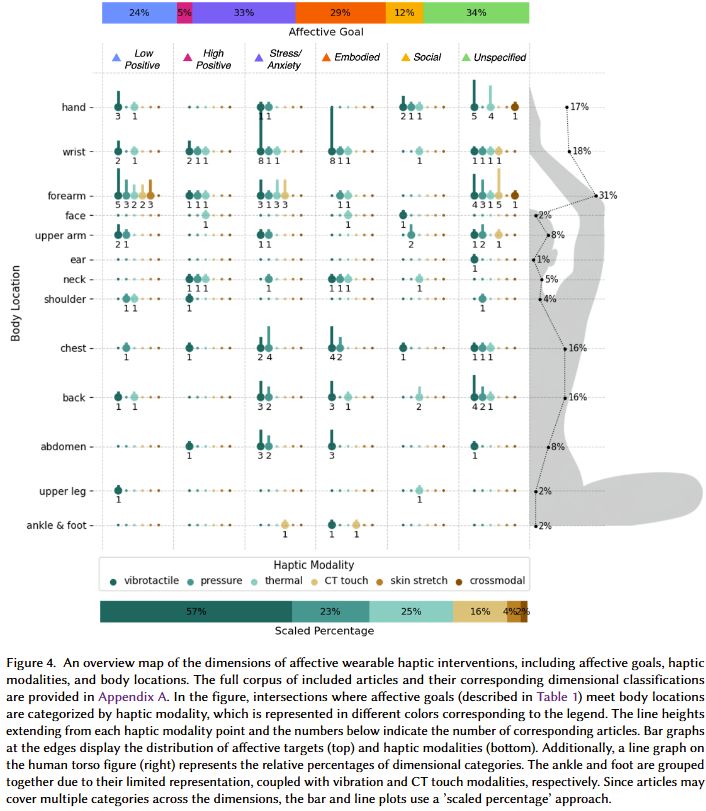
📢 We at #TECO are excited that our latest work, “Affective Wearable Haptic Interventions: A Systematic Literature Review,” first-authored by Jueun Lee, has been published in #IMWUT. As #wearable #haptics become increasingly present in everyday devices, we tackled the question of how touch-based #feedback can move beyond notification and interaction, and instead support affective well-being in subtle, low-effort ways. We systematically analyzed 83 articles to understand how wearable haptic interventions are currently being designed and evaluated across different affective goals, haptic modalities, body locations, and intervention mechanisms. A key takeaway is that affective outcomes cannot be understood through a single design choice alone. Instead, haptic modality, body placement, and intervention mechanism jointly shape the experience, with particularly strong potential in embodied physiological regulation and interpersonal connection. This also highlights promising future directions, especially in multi-user and socially mediated haptic interactions. Our work provides a structured foundation for researchers and designers working on the next generation of wearable systems that do not just sense our state but also shape it using wearable technology. You can read the publication here: 🔗 https://lnkd.in/ejVQM8nm Tobias Röddiger, Sarah Makarem, Till Riedel, Kai Kunze #TECO #IMWUT #WearableTech #Haptics #AffectiveComputing #MentalWellbeing #Wearables #HCI #HumanComputerInteraction #UbiComp #Research

Read more